.svg)
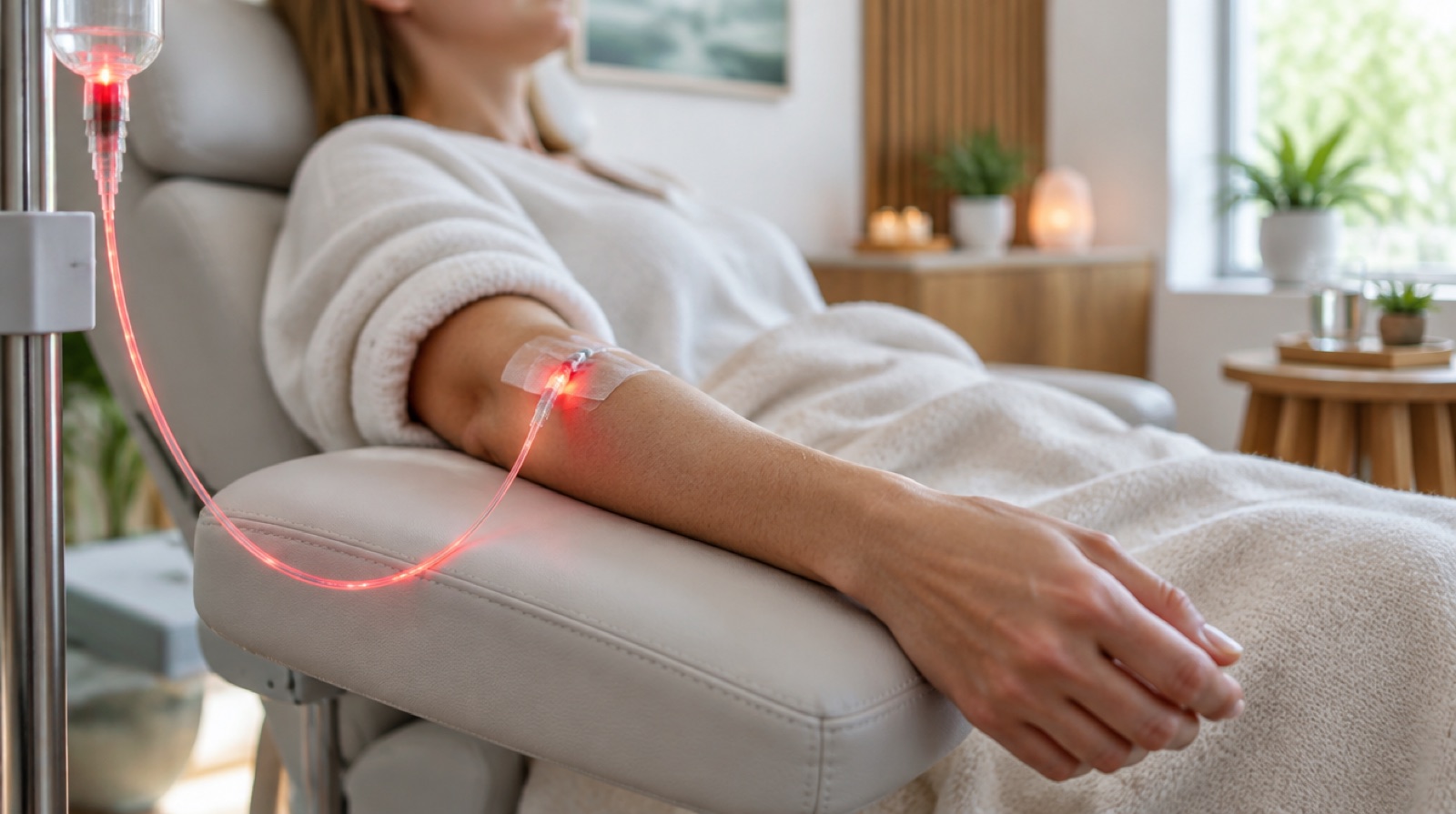
Red light therapy has gone mainstream, with panels in gyms, spas, and living rooms. A more advanced version of the same idea is now drawing attention from patients with chronic illness, fatigue, and slow recovery: shining low-level laser light directly into the bloodstream.
Intravenous laser therapy, also called intravenous laser blood irradiation (ILIB), delivers low-level laser light into the blood through a thin fiber-optic line placed in a vein. The light is intended to support mitochondrial energy production, circulation, and immune balance. At Quantum Functional Medicine in Carlsbad, it is performed with the Weber Medical laser system from Germany as part of individualized treatment plans.
How intravenous laser therapy works
Low-level laser therapy (LLLT), sometimes called photobiomodulation, uses specific wavelengths of light that are absorbed by cells, especially in the mitochondria. Research on photobiomodulation suggests this light can increase cellular energy (ATP) production, influence inflammatory signaling, and improve local blood flow.
Intravenous delivery takes the idea one step further. Instead of shining light through the skin, a fine fiber-optic cable is placed through a small IV catheter so that circulating blood passes directly by the light source throughout the session.
Why wavelength matters
The Weber system can deliver several colors of laser light, each chosen for different goals:
- Red: commonly used to support cellular energy and calm inflammation
- Green: often used with circulation and metabolic goals in mind
- Yellow: used in protocols aimed at immune balance and mood
- Blue: studied for its antimicrobial effects
- Infrared: used for deeper tissue and regenerative support
Your provider selects the wavelengths and sequence based on your health history and goals.
Who explores intravenous laser therapy
Patients typically come to intravenous laser therapy as part of a broader integrative plan for:
- Chronic fatigue and low energy
- Chronic pain and inflammatory conditions
- Lyme disease and other chronic illnesses
- Recovery from injury, surgery, or intense training
- Immune support during demanding periods
It is worth being candid: most of the research on intravenous laser therapy comes from Europe and Asia and involves smaller studies. The science on photobiomodulation is promising and growing, but ILIB is not a cure for any disease. We present it as a well-tolerated supportive therapy, not a standalone treatment.
What to expect during a session
After a medical evaluation to confirm you are a good candidate, a small IV catheter is placed in your arm and the sterile fiber-optic line is inserted. You relax in a treatment chair while the laser runs through its programmed wavelengths, usually for 30 to 60 minutes. There is no heat or sensation from the light itself, and most people return to normal activities right away.
Intravenous laser therapy is often combined with IV nutrient therapy, ozone therapy, or regenerative protocols. For some patients, Weber can also be applied topically or into joints for localized pain.
Safety and who should avoid it
Intravenous laser therapy is generally well tolerated. As with any IV procedure, minor bruising at the insertion site is possible. It may not be appropriate for people who are pregnant, have certain light-sensitivity conditions, take photosensitizing medications, or have specific medical conditions, which is why a medical evaluation comes first.
Intravenous laser therapy at Quantum Functional Medicine in Carlsbad
Our Carlsbad clinic offers Weber intravenous laser therapy to patients across North County San Diego. Every plan starts with a consultation to review your history, labs, and goals, so light therapy is used where it makes sense rather than as a one-size-fits-all add-on. Request a consultation to learn whether it is a fit for you.
Frequently asked questions
Does intravenous laser therapy hurt?
Most patients feel only the small pinch of the IV catheter being placed. The laser light itself is low-level and is not felt, and many people relax or read during the session.
How long does a session take?
A typical intravenous laser session lasts roughly 30 to 60 minutes, depending on the wavelengths used and your treatment plan.
How many sessions will I need?
It varies by goal. Many plans start with a series of sessions over several weeks, followed by reassessment. Your provider will recommend a cadence based on your condition and response.
Is intravenous laser therapy FDA approved?
Low-level laser devices have various regulatory clearances, but intravenous laser therapy for most chronic conditions is considered an integrative or investigational approach in the United States. That is why it should be provided under medical supervision as part of a broader plan.
Can it be combined with other therapies?
Yes. Intravenous laser therapy is often paired with IV nutrient therapy, ozone therapy, or detox and regenerative protocols, depending on your needs.
This article is for educational purposes only and is not medical advice. Please consult a qualified healthcare provider to determine whether intravenous laser therapy is appropriate for you.
Read More Blogs!
Stay updated with the latest blog posts and engage with our community.